01
Phase I–III Vaccine Trials
Clinical trial capabilities spanning early-phase development through Phase III studies.



Services
OUR VACCINE CLINICAL TRIAL CAPABILITIES
01
Clinical trial capabilities spanning early-phase development through Phase III studies.
02
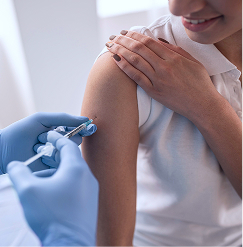
Controlled dosing with intensive medical oversight and post-vaccination monitoring.

03
Established volunteer database for efficient recruitment and participant retention (14 000+)

04
Monitoring of local and systemic reactions, adverse events, and safety signals.

05
Sample collection for antibody, neutralizing antibody, and other immune response endpoints.

06
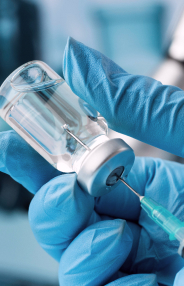
Experience with mRNA, recombinant, conjugate, protein-based, and other vaccine technologies.

07
Clinical facilities for intensive observation, scheduled visits, and long-term follow-up.

08
Regulatory support and clinical trial conduct within the EU and ICH-GCP framework.


09
CRO and clinical site teams working together throughout study delivery.


22+ Vaccine Clinical Trials

1,760+ Participants Enrolled

Phase I–III

19+ Years in Vaccine Research

As a specialized European CRO, we support biotechnology companies, pharmaceutical sponsors, and vaccine developers with comprehensive vaccine research and clinical trial services.
Our multidisciplinary team brings extensive experience in vaccine clinical development, providing strategic guidance and operational support from study design and regulatory planning to Phase I–IV clinical trials, patient recruitment, data management, medical monitoring, and pharmacovigilance. We help accelerate vaccine development while ensuring full compliance with European and international regulatory requirements, Good Clinical Practice (GCP), and the highest quality standards. By combining scientific expertise, regulatory knowledge, and operational excellence, we deliver reliable, efficient, and patient-focused clinical research solutions that help bring innovative, safe, and effective vaccines from early development through regulatory approval and beyond.
Choosing the right CRO is critical to the success of every vaccine development program. Global vaccine sponsors trust Convex for our scientific expertise, responsive project management, and deep understanding of the European clinical research landscape.
We build dedicated teams that work as an extension of each sponsor, providing transparent communication, proactive risk management, and flexible solutions tailored to project goals. Our focus on quality, regulatory compliance, and operational excellence helps reduce delays, improve study performance, and support faster decision-making. By combining local expertise with international standards, Convex delivers reliable partnerships that enable sponsors to advance innovative vaccines with confidence, efficiency, and long-term success.


Convex is internationally recognized for its expertise in Phase I and First-in-Human vaccine clinical trials. Early-phase vaccine studies are critical decision points, and our Phase I unit is designed to generate clear, decision-ready data while maintaining the highest safety standards.
Phase I vaccine studies conducted at Convex clinical research site focus on:
Our dedicated Phase I clinical research unit in Europe supports both inpatient and outpatient vaccine studies, enabling intensive post-vaccination monitoring and rapid medical response when required. All studies are conducted by experienced investigators, emergency medicine specialists, and highly trained study nurses with deep expertise in biologics and vaccines.
Convex delivers comprehensive vaccine clinical trial services designed to accelerate study start-up, patient recruitment, and successful trial delivery. Our integrated approach combines the expertise of an experienced European CRO with a dedicated clinical trial platform and a continuously expanding database of pre-screened volunteers interested in participating in vaccine studies.
This unique ecosystem enables faster participant identification, improved recruitment performance, and more efficient enrollment across clinical trial phases. Together with our regulatory, clinical operations, medical monitoring, data management, and pharmacovigilance capabilities, we help sponsors reduce recruitment delays, improve study execution, and complete vaccine clinical trials on time while maintaining the highest standards of quality, compliance, and participant safety.


For more than 20 years, our site has specialized in Phase I and Phase II vaccine clinical trials involving healthy adult volunteers. We have successfully enrolled and randomized hundreds of participants, delivering high-quality clinical research in accordance with Good Clinical Practice.
Safety and immunogenicity are the cornerstones of vaccine clinical research. At Convex, both are embedded into every operational and clinical decision.
Participant safety is ensured through continuous medical oversight, real-time adverse event detection, and robust pharmacovigilance processes aligned with EU and global regulatory requirements. Our teams are trained to identify, assess, and report safety events with speed, accuracy, and transparency.
Immunogenicity assessments are performed through structured clinical and laboratory processes, supported by standardized sampling and close collaboration with qualified bioanalytical laboratory. This ensures high-quality, traceable immune response data suitable for global regulatory submissions.


Running vaccine clinical trials in Europe requires a strong understanding of local regulatory requirements and close interaction with the relevant authorities. Convex works in full compliance with the EU Clinical Trials Regulation (CTR 536/2014) and ICH-GCP E6, ensuring that all study data is suitable for EMA, FDA, and other global regulatory submissions.
Our regulatory teams support sponsors at every stage of the trial lifecycle—from initial submissions and protocol amendments to inspection readiness and post-study documentation—helping programs move forward smoothly and with confidence
At Convex, our teams work as one—clinical operations, site staff, safety, and data specialists are closely aligned throughout the study. This approach simplifies collaboration, reduces risk, and helps keep projects on track.
With CRO services and clinical site execution under one roof, sponsors benefit from a higher level of visibility, control, and predictability, especially in complex vaccine trials


When biotechnology and pharmaceutical sponsors consider where to conduct a vaccine clinical trial in Europe, they are not simply choosing a country. They are selecting a regulatory environment, a clinical research culture, medical expertise, access to study participants, and a way of working.
Over time, Bulgaria has steadily established itself as one of the most attractive locations within the European Union for vaccine clinical trials, particularly for Phase I–III studies. This is not driven by “low cost,” but by a balanced combination of EU regulatory certainty, high-quality clinical execution, operational efficiency, and predictability.
Full Alignment with the European Union Regulatory Framework
One of Bulgaria’s strongest advantages is its status as a full member of the European Union. As a result, all clinical trials—including vaccine studies—are conducted under the same regulatory standards that apply in Germany, France, the Netherlands, and other leading EU countries.
Vaccine clinical trials in Bulgaria are conducted in full compliance with:
Clinical data generated in Bulgaria is fully acceptable to the EMA and is routinely used for FDA and other global regulatory submissions. For sponsors, this provides confidence and peace of mind—there is no need for additional validation, repeat studies, or regulatory compromises.
A Long-Standing Track Record in Clinical Research
Bulgaria is not new to clinical research. The country has more than 40 years of experience conducting international clinical trials across a wide range of therapeutic areas, including infectious diseases and vaccines.
Many physicians and principal investigators in Bulgaria have participated in dozens of international clinical trials by working regularly with global sponsors and CROs and in the same time have a strong understanding of EMA and FDA expectations. This depth of experience has created a well-established clinical research culture focused on protocol discipline, patient safety, and data quality—key elements for successful vaccine development.
Highly Qualified Medical Professionals and Clear Communication
Bulgarian Clinical study investigators, study nurses, and clinical research teams are highly trained and well prepared. Medical education meets EU standards, and many professionals have additional international training or experience in global research collaborations.
Another important advantage is the high level of communication in English. It is clear and efficient. Documentation is maintained accurately and professionally. Also the risk of misunderstandings or delays is minimized. For international sponsors, this significantly improves day-to-day collaboration and overall study efficiency.
Faster Study Start-Up Without Compromising Quality
Vaccine development programs are often time-sensitive. Bulgaria offers efficient and predictable timelines for: ethics committee approvals/ regulatory submissions and study initiation
Importantly, this efficiency does not come at the expense of quality or oversight. Bulgarian regulatory authorities and ethics committees are known for their balanced and professional approach, ensuring patient protection and scientific integrity while avoiding unnecessary administrative burden.
For sponsors, this translates into earlier study start-up and smoother execution, without regulatory surprises later in the program.
Strong Access to Healthy Volunteers and Patient Populations
The success of vaccine clinical trials depends heavily on reliable recruitment and retention.
Bulgaria offers several key advantages:
For Phase I vaccine studies, Bulgaria benefits from well-organized databases of healthy volunteers. For Phase II–III trials, sponsors have access to diverse and representative patient populations.
All recruitment activities are conducted ethically, transparently, and in full compliance with EU regulations and informed consent requirements.
Cost Efficiency with High Scientific Value
While cost should never be the primary driver of clinical research decisions, Bulgaria offers an excellent cost-to-quality ratio.
This allows sponsors to optimize development budgets. In practical terms, sponsors can often achieve greater scientific value with the same budget, without compromising regulatory or ethical standards.
An Excellent Environment for Phase I and First-in-Human Vaccine Studies
Bulgaria has become an increasingly attractive location for Phase I and First-in-Human (FIH) vaccine trials, supported by:
Together, these factors provide a controlled, safe, and professional environment for early-stage vaccine development, including novel and next-generation platforms.
Strong Focus on Data Quality and Data Integrity
Clinical research centers in Bulgaria are accustomed to working under: sponsor audits, CRO audits and regulatory inspections
Seamless Integration into Global Clinical Development Programs
Clinical trials conducted in Bulgaria integrate smoothly into global development strategies. Data generated locally can be pooled with data from Western Europe or the United States without regulatory concerns.
This makes Bulgaria a flexible option for EU-only vaccine trials and global multi-country development programs
A Collaborative and Practical Working Style
Many sponsors highlight the pragmatic and partnership-oriented approach of Bulgarian clinical research teams. Communication is open, challenges are addressed early, and the focus remains on finding practical solutions.This collaborative working style is particularly valuable in complex vaccine programs, where close coordination and rapid decision-making are essential.
From early discovery programs to post-authorization commitments, Convex acts as a trusted long-term partner for vaccine developers. We support sponsors with scientific insight, regulatory confidence, and operational excellence—helping transform innovative vaccine concepts into approved, real-world solutions.

Vaccine clinical trials are an essential part of vaccine development, designed to assess the safety, tolerability, immunogenicity, and effectiveness of investigational vaccines. The data generated through these studies support regulatory decision-making and ensure that new vaccines meet the highest standards of quality, safety, and efficacy before they are introduced into clinical practice.
Vaccines are among the most effective public health interventions, protecting people from serious infectious diseases and reducing their spread. They save lives, decrease hospitalizations, and help prevent outbreaks worldwide. According to official estimates from the World Health Organization (WHO), vaccines prevent over 5 million deaths globally every year.
Before a vaccine receives approval from regulatory authorities, it must successfully complete several phases of clinical development. Phase I evaluates safety, dosage, and immune response in healthy volunteers. Phase II expands safety and immunogenicity assessments in larger populations, while Phase III confirms safety and efficacy. Following regulatory approval, Phase IV monitors long-term safety and effectiveness in real-world populations.
Our site conducts Phase I and Phase II vaccine clinical trials, including first-in-human, dose-escalation, placebo-controlled, and active-controlled studies. We have experience evaluating mRNA, recombinant, conjugate, and inactivated vaccines for COVID-19, influenza, RSV, pneumococcal disease, HPV, meningococcal disease, hepatitis B, and cytomegalovirus (CMV) in healthy adult volunteers.
Yes. Our site has experience conducting Phase I and Phase II clinical trials evaluating investigational mRNA vaccines, including COVID-19 and Cytomegalovirus (CMV) vaccine candidates. These studies involved healthy adult volunteers and focused on assessing safety, reactogenicity, immunogenicity, and immune response in accordance with Good Clinical Practice (GCP).
Yes. Our clinical research site has conducted Phase I and Phase I/II studies evaluating conjugate vaccines, including pneumococcal and meningococcal vaccine candidates. These trials assessed safety, tolerability, immunogenicity, and functional antibody responses in healthy adult volunteers using randomized and controlled study designs.
Yes. Our investigators have experience conducting clinical trials of recombinant vaccine candidates, including hepatitis B vaccines, as well as protein-based vaccine studies targeting respiratory and infectious diseases. These studies evaluated vaccine safety, tolerability, and immunogenicity in healthy adult volunteers during early clinical development.
Yes. Our site has extensive experience conducting Phase I vaccine clinical trials in healthy adult volunteers. We have participated in first-in-human, dose-escalation, randomized, and controlled studies evaluating mRNA and other vaccine candidates for COVID-19, influenza, RSV, HPV, pneumococcal disease, hepatitis B, meningococcal disease, and CMV.
Yes. We have experience conducting Phase II vaccine clinical trials in healthy adult volunteers. Over the years, our site has built a large database of potential participants and has successfully enrolled and randomized hundreds of volunteers across a wide range of vaccine clinical studies.
Yes. Our site has experience conducting Phase III vaccine clinical trials in healthy adult volunteers. We have supported large-scale enrollment across multiple vaccine studies while maintaining high standards of participant safety, protocol compliance, and data quality throughout every stage of the clinical trial.
Yes. Our site is fully equipped to conduct first-in-human vaccine clinical trials. We have an experienced clinical research team, dedicated facilities, and established procedures to support dose-escalation studies, including SAD protocols. We also maintain a well-established healthy volunteer database, enabling efficient enrollment while ensuring participant safety and protocol compliance.
Our site has experience conducting clinical trials for vaccines targeting a broad range of infectious diseases, including COVID-19, seasonal influenza, respiratory syncytial virus (RSV), pneumococcal disease, human papillomavirus (HPV), meningococcal disease, hepatitis B, and cytomegalovirus (CMV). These studies have primarily involved healthy adult volunteers in Phase I-III clinical development.
Vaccine clinical trials commonly evaluate endpoints related to safety, tolerability, reactogenicity, immunogenicity, and clinical efficacy. Depending on the study phase and vaccine type, assessments may include adverse events, local and systemic reactions, antibody levels, neutralizing antibody responses, seroconversion rates, and the vaccine’s ability to prevent infection or disease.
Vaccine safety is assessed through continuous monitoring of participants throughout the clinical trial. Researchers evaluate local and systemic reactions, adverse events, laboratory findings, vital signs, and any serious adverse events. Safety data are reviewed throughout the study to ensure participant well-being and compliance with regulatory and Good Clinical Practice (GCP) standards.
Vaccine immunogenicity is measured by evaluating the immune response following vaccination. Depending on the study protocol, assessments may include antibody concentrations, neutralizing antibody responses, seroconversion rates, and, when applicable, cellular immune responses. These endpoints help determine the vaccine’s ability to stimulate a protective immune response.
Reactogenicity refers to the expected short-term reactions that may occur after vaccination as the body’s immune system responds. These commonly include pain or redness at the injection site, fever, fatigue, headache, or muscle aches. Monitoring reactogenicity helps researchers evaluate the vaccine’s short-term safety and tolerability.
Vaccine safety evaluates whether a vaccine causes adverse events or unexpected reactions, while immunogenicity measures the body’s immune response following vaccination. Together, these endpoints help determine whether an investigational vaccine is well tolerated and capable of generating a protective immune response during clinical development.
The duration of a vaccine clinical trial depends on the study phase, protocol, and follow-up requirements. Phase I studies may last several months, while Phase II and Phase III trials often continue for over a year. Long-term follow-up may be included to further evaluate vaccine safety, immunogenicity, and effectiveness.
A successful vaccine clinical trial site combines experienced investigators, qualified research staff, efficient participant recruitment, and strong regulatory compliance. Very important are access to healthy volunteers, high-quality data collection, participant safety, and the ability to conduct studies according to Good Clinical Practice (GCP) and study protocols.
Convex has been involved in vaccine clinical research for many years, supporting Phase I-III studies across multiple vaccine indications. Our experienced research team, established volunteer database, and commitment to Good Clinical Practice allow us to deliver reliable clinical research and support sponsors throughout every stage of vaccine development.
Vaccine clinical trials provide the scientific evidence needed to develop safe and effective vaccines. They help identify the optimal vaccine dose, evaluate immune responses, and confirm safety before regulatory approval. By supporting the development of new vaccines, these studies contribute to disease prevention and improved public health worldwide. Save many lives every year.